Being a freelancer in my hometown of Los Angeles for the past 12 years, I have played a lot of different types of gig. I’ve played on stage at Disney Hall and the Hollywood Bowl and in the legendary scoring stages of Warner Bros., Fox, and Sony. I’ve toured to China, Europe, and the Middle East. But I have played in the pit for musical theatre shows more than any other professional situation.
If you’re in school studying percussion right now, that might sound out of the ordinary. You’ve played lots of symphonies, maybe a few operas, loads of percussion ensemble or other chamber music and the excerpt from Porgy and Bess more times than can be counted. But it’s a rare opportunity in the academic world to work in the realm of “Shows.”
If you’re in school studying percussion right now, that might sound out of the ordinary. You’ve played lots of symphonies, maybe a few operas, loads of percussion ensemble or other chamber music and the excerpt from Porgy and Bess more times than can be counted. But it’s a rare opportunity in the academic world to work in the realm of “Shows.”
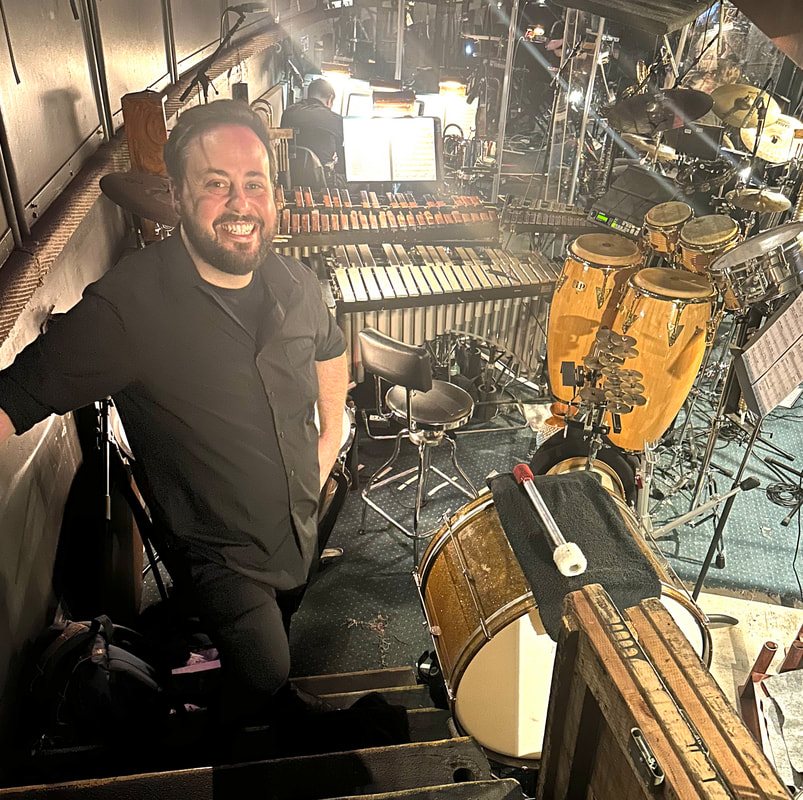
(Above: In the pit for Legally Blonde at the La Mirada Theatre)
Musical Theatre Today
Musical theatre is a thriving art form, despite what you may occasionally hear from the producers of the Broadway League. In scholastic, community, regional, touring, and Broadway settings, musical theatre is a huge part of performing life across this country. Take a look at the performing arts center calendar in any city - musicals make up a large portion of the acts and have more dates in each city than just about any other kind of performance.
Theatre has made up a big part of the career of the most successful freelancers I know, including the top call musicians in LA’s Film Studios. So the earlier you can get a foothold in this world, the better. I’ve seen many players leaving music school and out in the professional world who haven’t developed the skills needed to pursue this line of work.
What Makes Musical Theatre Different
Playing a theatre show is unique in that it requires a synthesis of the skills you’ve developed across different ensembles, styles, and musical traditions. What other scenarios regularly have one person playing timpani, mallets, drum set, and Afro-Cuban percussion all in the same performance?
This means you as a player have an enormous responsibility - you have to sound like a great timpanist, mallet player, drummer, and conguero all at once. It can be a real drag on the whole show if you sound great at two of those things, and the other stuff just isn’t up to snuff. Having a strong skillset in everything you’re called upon to play is vital.
I’ll go over versatility more in another article, but a specific skill I don’t hear talked about for musical theatre is finding the right balance for a given scenario, in a couple different ways.
The Page
If you’re a classically focused percussionist, you might have a tendency to defer totally to the written note in order to discern the composer’s ultimate will. Bringing those notes to life with style and prowess is what makes the job a lifelong study.
If you’re a drum set player, you might be used to using a chart as a guide towards an effect a composer or arranger was going for, while realizing that all those slashes mean the person who put the chart together is deferring to your considerable expertise to make the music sound great.
Theatre brings these two things together. Sometimes the only thing to do is play exactly what’s written. Those mallet runs should almost certainly be played exactly as notated. That bongo part that sounds like a drum machine part from 1991 when you play it as written? Maybe you should adjust it based on your understanding of Cuban musical styles. As an example take a look at what the Simon Bolivar Orchestra from Venezuela does with Bernstein’s Mambo - adding parts and playing different grooves based on their understanding of the style:
Musical Theatre Today
Musical theatre is a thriving art form, despite what you may occasionally hear from the producers of the Broadway League. In scholastic, community, regional, touring, and Broadway settings, musical theatre is a huge part of performing life across this country. Take a look at the performing arts center calendar in any city - musicals make up a large portion of the acts and have more dates in each city than just about any other kind of performance.
Theatre has made up a big part of the career of the most successful freelancers I know, including the top call musicians in LA’s Film Studios. So the earlier you can get a foothold in this world, the better. I’ve seen many players leaving music school and out in the professional world who haven’t developed the skills needed to pursue this line of work.
What Makes Musical Theatre Different
Playing a theatre show is unique in that it requires a synthesis of the skills you’ve developed across different ensembles, styles, and musical traditions. What other scenarios regularly have one person playing timpani, mallets, drum set, and Afro-Cuban percussion all in the same performance?
This means you as a player have an enormous responsibility - you have to sound like a great timpanist, mallet player, drummer, and conguero all at once. It can be a real drag on the whole show if you sound great at two of those things, and the other stuff just isn’t up to snuff. Having a strong skillset in everything you’re called upon to play is vital.
I’ll go over versatility more in another article, but a specific skill I don’t hear talked about for musical theatre is finding the right balance for a given scenario, in a couple different ways.
The Page
If you’re a classically focused percussionist, you might have a tendency to defer totally to the written note in order to discern the composer’s ultimate will. Bringing those notes to life with style and prowess is what makes the job a lifelong study.
If you’re a drum set player, you might be used to using a chart as a guide towards an effect a composer or arranger was going for, while realizing that all those slashes mean the person who put the chart together is deferring to your considerable expertise to make the music sound great.
Theatre brings these two things together. Sometimes the only thing to do is play exactly what’s written. Those mallet runs should almost certainly be played exactly as notated. That bongo part that sounds like a drum machine part from 1991 when you play it as written? Maybe you should adjust it based on your understanding of Cuban musical styles. As an example take a look at what the Simon Bolivar Orchestra from Venezuela does with Bernstein’s Mambo - adding parts and playing different grooves based on their understanding of the style:
Knowing if, when, and how to adjust parts often comes down to experience, another argument for getting into this medium as early as possible.
The Set Up
When you’re hired as the local percussionist for a national touring broadway show, they might provide you the entire rig, but if they don’t you better have every instrument written in the score, and maybe two of them for things like triangles and tambourines.
This goes too for big regional productions where you might be paid a union rate and doubling fees for each instrument category you are playing (and providing.)
The Set Up
When you’re hired as the local percussionist for a national touring broadway show, they might provide you the entire rig, but if they don’t you better have every instrument written in the score, and maybe two of them for things like triangles and tambourines.
This goes too for big regional productions where you might be paid a union rate and doubling fees for each instrument category you are playing (and providing.)
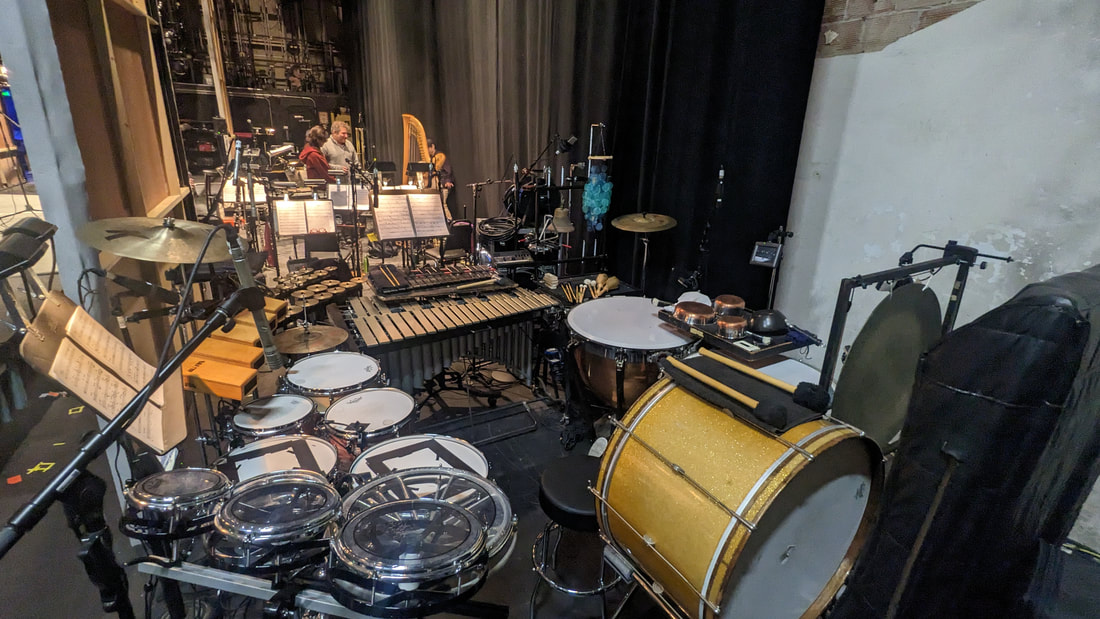
(Above: The set up for Sunday In The Park With George, part of the Pasadena Playhouse's Tony Award Winning 2023 season)
The local high school production of the Wizard of Oz where they only hired one person to cover the two books? Now it’s time for your discernment again. If what the performance needs is solid rhythm on the drum set for 90% of the time, it might not make sense to bring vibraphone, chimes, and a gong if you can only grab a bar or two on them. Especially when space is always at a premium, doubly so in school settings.
The local high school production of the Wizard of Oz where they only hired one person to cover the two books? Now it’s time for your discernment again. If what the performance needs is solid rhythm on the drum set for 90% of the time, it might not make sense to bring vibraphone, chimes, and a gong if you can only grab a bar or two on them. Especially when space is always at a premium, doubly so in school settings.
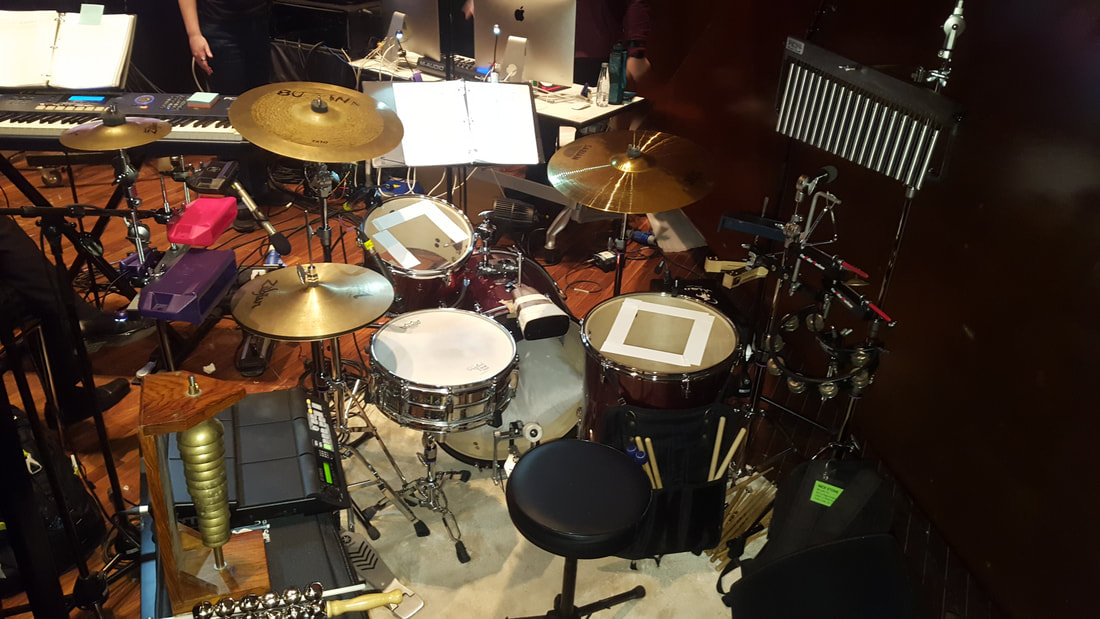
(Above: The setup for a Peter Pan tour to Riyadh. Traveling internationally meant I could only bring. a small number of vital instruments on the plane - the drum set itself (including that heinous Ride cymbal) was back lined.)
Keep in mind, though, that it might be imperative to bring the appropriate siren whistle and klaxon - sound effects are often important moments in the show. Not only are we called on to be drummer and percussionist, we might be the Foley artist as well!
Having a good line of communication with the Music Director will prove invaluable here, so you can bring what is important and not lug anything (especially anything heavy) that you won’t end up using.
And while you can make sure that at the first rehearsal you’ve got everything you and the MD think is important, the director or choreographer might still ask you (hopefully politely and ideally via the music director) to add additional sound effects, and you should be ready to adapt as you need.
The Sticks
This is the part where I feel some of my classically oriented colleagues clam up the most. The unfortunate reality is that the demands of a musical theatre part mean covering as many instruments as a whole section of players might play in a symphony and you won’t always have the perfect stick in your hand. You might even play an instrument with a stick that feels downright wrong.
But finding the best stick for all that you’re doing is really important, and relies on the same discerning musical ear you’ve been using to pick mallets for each excerpt on an orchestral audition.
If you have to play a few bars of rolling rudimental snare drum, followed by a xylophone run, followed by a big timpani roll to end Act I, no one stick will really do it all, not even a flip stick with two different ends. This is where compromise comes in.
Keep in mind, though, that it might be imperative to bring the appropriate siren whistle and klaxon - sound effects are often important moments in the show. Not only are we called on to be drummer and percussionist, we might be the Foley artist as well!
Having a good line of communication with the Music Director will prove invaluable here, so you can bring what is important and not lug anything (especially anything heavy) that you won’t end up using.
And while you can make sure that at the first rehearsal you’ve got everything you and the MD think is important, the director or choreographer might still ask you (hopefully politely and ideally via the music director) to add additional sound effects, and you should be ready to adapt as you need.
The Sticks
This is the part where I feel some of my classically oriented colleagues clam up the most. The unfortunate reality is that the demands of a musical theatre part mean covering as many instruments as a whole section of players might play in a symphony and you won’t always have the perfect stick in your hand. You might even play an instrument with a stick that feels downright wrong.
But finding the best stick for all that you’re doing is really important, and relies on the same discerning musical ear you’ve been using to pick mallets for each excerpt on an orchestral audition.
If you have to play a few bars of rolling rudimental snare drum, followed by a xylophone run, followed by a big timpani roll to end Act I, no one stick will really do it all, not even a flip stick with two different ends. This is where compromise comes in.
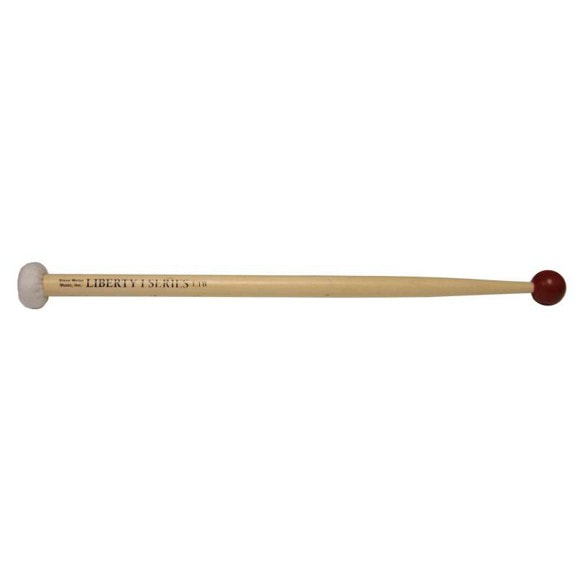
(Above: Steve Weiss' Liberty One Combination Sticks)
Maybe you decide to have a double sided stick with xylophone and timpani ends. You can make a decent sound on the snare drum with the xylo mallets, a good sound on the xylophone with the same, and then flip the sticks for a nice warm timpani roll.
Or perhaps it’s too fast even for that and you use your favorite Becker blues and a particularly light touch on all three instruments? I promise you, the timpani heads won’t instantly split in half if you use a good touch.
But there are definitely limits. You aren’t going to make even a halfway decent sound if you play all of these instruments with your snare drum sticks.
It comes back to balance - space is always at a premium, remember, so having every version of a double ended stick might not be practical. But if you play something one way and it doesn’t meet your musical standards, it’s time to find another way. Maybe there’s a pair of mallets under an arm or even in your teeth for one of these sections
It all comes down to your judgement. The discerning ear you’ve been developing your whole musical life will tell you when you’re making the sounds needed to serve the show up on stage - our ultimate goal.
Experience is Key
I recently had the pleasure of speaking to the legendary Seattle percussionist and theatre virtuoso Paul Hansen. When talking about playing musicals, he impressed upon me the idea that for young players, the only way to learn is to do. There’s no substitute for having hundreds of performances of dozens of shows under your belt.
Your approach will grow and change with each of these, and that’s one of the most fun parts about playing shows! You get to constantly learn and evolve, developing your skills in many areas.
Lifelong Learning
When the show Come From Away was first touring, I went and saw it at the Ahmanson Theatre here in LA. I was blown away. It quickly became my favorite show, and I saw it twice on Broadway. I loved that the percussion book was focused around just a few instruments and primarily the Irish bodhran. I had never played one, and I figured if I were to ever play that show, I better start learning.
I got in touch with fabulous theatre percussionist and number one call LA bodhran player Bruce Carver, and he was nice enough to get me started. For years, in between practicing all the other skills that I needed as a player, I slowly developed my bodhran chops. For years it was a total uphill struggle. But 5 years after I first saw that touring production, I was lucky enough to play that bodhran book in one of the regional theatre premiers at Theatre Aspen.
Maybe you decide to have a double sided stick with xylophone and timpani ends. You can make a decent sound on the snare drum with the xylo mallets, a good sound on the xylophone with the same, and then flip the sticks for a nice warm timpani roll.
Or perhaps it’s too fast even for that and you use your favorite Becker blues and a particularly light touch on all three instruments? I promise you, the timpani heads won’t instantly split in half if you use a good touch.
But there are definitely limits. You aren’t going to make even a halfway decent sound if you play all of these instruments with your snare drum sticks.
It comes back to balance - space is always at a premium, remember, so having every version of a double ended stick might not be practical. But if you play something one way and it doesn’t meet your musical standards, it’s time to find another way. Maybe there’s a pair of mallets under an arm or even in your teeth for one of these sections
It all comes down to your judgement. The discerning ear you’ve been developing your whole musical life will tell you when you’re making the sounds needed to serve the show up on stage - our ultimate goal.
Experience is Key
I recently had the pleasure of speaking to the legendary Seattle percussionist and theatre virtuoso Paul Hansen. When talking about playing musicals, he impressed upon me the idea that for young players, the only way to learn is to do. There’s no substitute for having hundreds of performances of dozens of shows under your belt.
Your approach will grow and change with each of these, and that’s one of the most fun parts about playing shows! You get to constantly learn and evolve, developing your skills in many areas.
Lifelong Learning
When the show Come From Away was first touring, I went and saw it at the Ahmanson Theatre here in LA. I was blown away. It quickly became my favorite show, and I saw it twice on Broadway. I loved that the percussion book was focused around just a few instruments and primarily the Irish bodhran. I had never played one, and I figured if I were to ever play that show, I better start learning.
I got in touch with fabulous theatre percussionist and number one call LA bodhran player Bruce Carver, and he was nice enough to get me started. For years, in between practicing all the other skills that I needed as a player, I slowly developed my bodhran chops. For years it was a total uphill struggle. But 5 years after I first saw that touring production, I was lucky enough to play that bodhran book in one of the regional theatre premiers at Theatre Aspen.
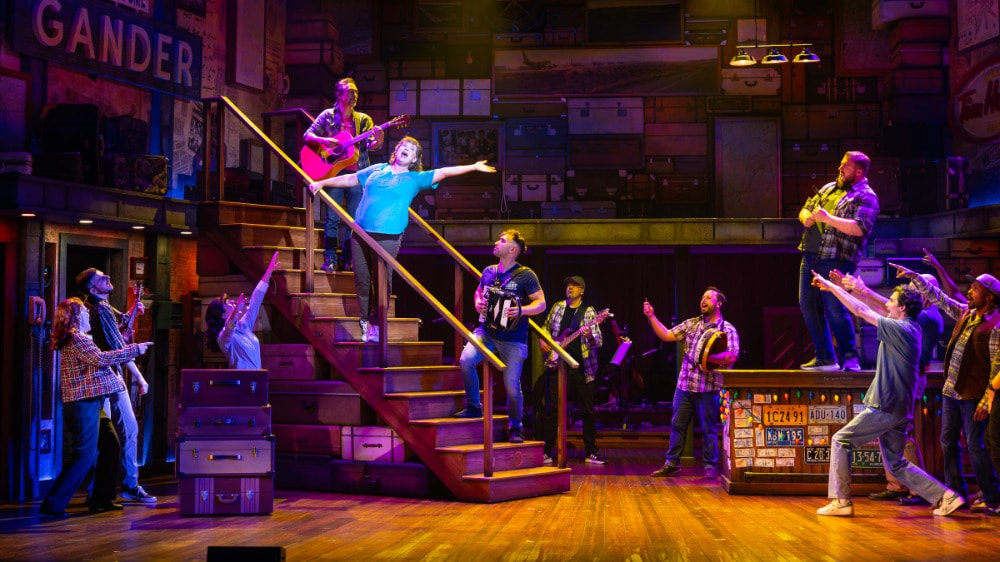
(Above: Come From Away at the La Mirada Theatre in 2025)
By balancing that new skill into the already crowded practice schedule needed to keep up my skills in the more obvious percussion areas, I was able to add this wonderful show to my repertoire and increase my marketability as a player overall.
If you can find balance, you have a great chance at having a successful music career.
By balancing that new skill into the already crowded practice schedule needed to keep up my skills in the more obvious percussion areas, I was able to add this wonderful show to my repertoire and increase my marketability as a player overall.
If you can find balance, you have a great chance at having a successful music career.
 RSS Feed